
Check your balls this Movember
Let’s talk about your nuts. Maybe you don’t usually give your nuts much thought. Getting to know what’s normal for you makes it easier to spot changes and know when to get them checked.
What is testicular cancer?
Testicular cancer starts when cells in a testicle grow out of control. The testicles are two small, oval-shaped organs that sit in the scrotum, the pouch of skin below the penis. They produce sperm and the hormone testosterone.
It’s the most common cancer in young men and with a survival rate of more than 95%, it’s highly curable when caught early.
What are some signs to look out for?
Testicular cancer may cause:
· A painless lump or swelling in either testicle.
· A change in how a testicle feels, including increased firmness or a difference in size.
· A feeling of heaviness or a sudden build-up of fluid in the scrotum.
· A dull ache in the lower abdomen or groin.
· Pain or discomfort in a testicle or the scrotum.
So go on. Have a feel. Not sure how? Follow this quick two-minute guide to check what feels normal for you.
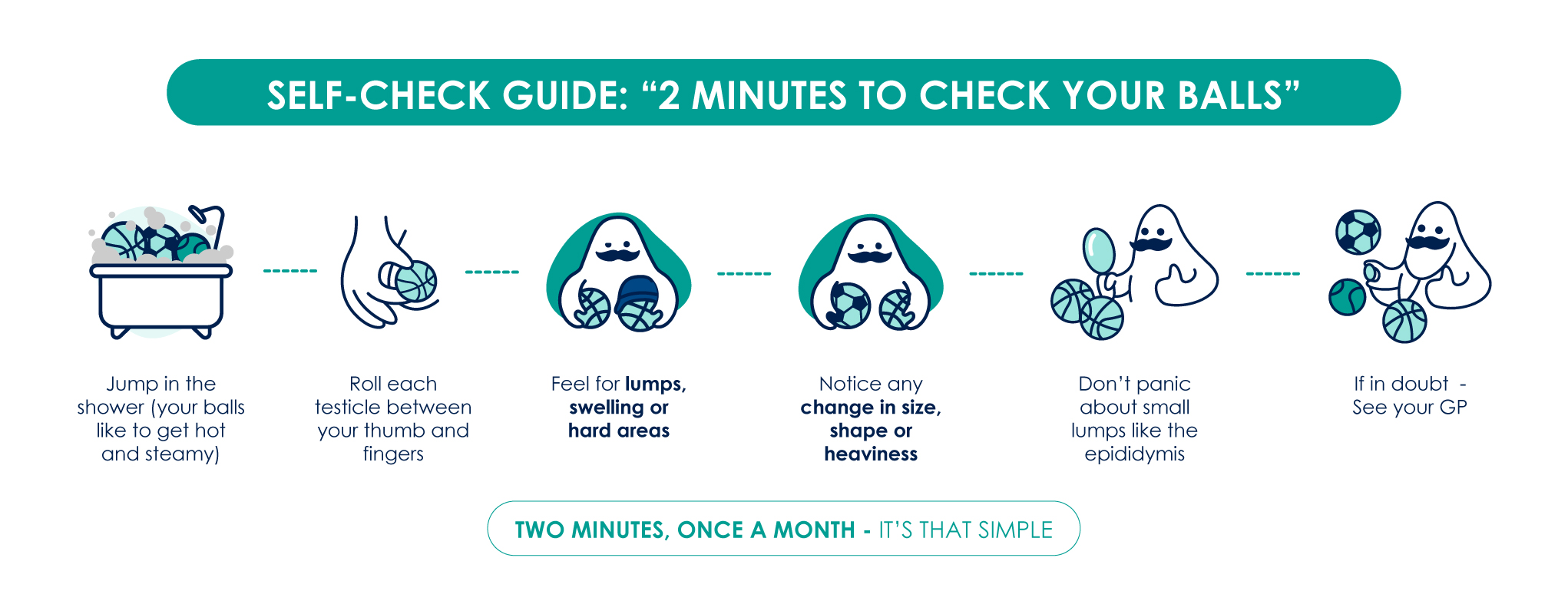
Checking your testicles once a month is a simple way to look after your health. Once you've got a feel for what's normal for you, keep the ball rolling and check for changes over time.
What happens when you see a doctor?
Tell your doctor why you’re there: whether it’s because you think you’ve found a lump on one or both of your testicles, or you’re experiencing some pain or swelling. No matter your concern, your doctor has heard it all before. Promise.
They’ll probably ask you some more questions and get a gauge on whether you’ve been experiencing any other symptoms or issues. They might ask you to lie down for the exam, or you might be able to do it standing. Working with your doctor will be a big help.
What happens after the examination?
This check-up will probably have one of two outcomes:
1. The doctor tells you not to worry and sends you on your way.
2. The doctor sends you for some simple tests such as an ultrasound, a blood test or a urine test.
Whatever the next step, you can talk it through with your GP.
Still have questions, or not sure how to start the conversation? The resources below are a good place to turn.
Support and next steps
Join Men’s Health Spotlight: Destigmatising Prostate & Testicular Cancer to learn about risks, early signs and checks. The session will also explore ways to make conversations about men’s health easier at home and at work.
View webinar details and register here.

Cancer support through MyWellbeing
If you or someone in your family is affected by cancer, Cancer Support by Osara Health to learn about the support available.
Supporting a colleague with cancer
When a colleague shares a cancer diagnosis, it can be hard to know what to say. You don’t need the perfect words to show you care. Read What to say to a colleague diagnosed with cancer for simple ways to start the conversation, listen and offer support.
References
Testicular cancer: From diagnosis to treatment to life afterwards, we’ve got your back | Movember
Lump, swelling or pain: How to check your testicles | Movember

